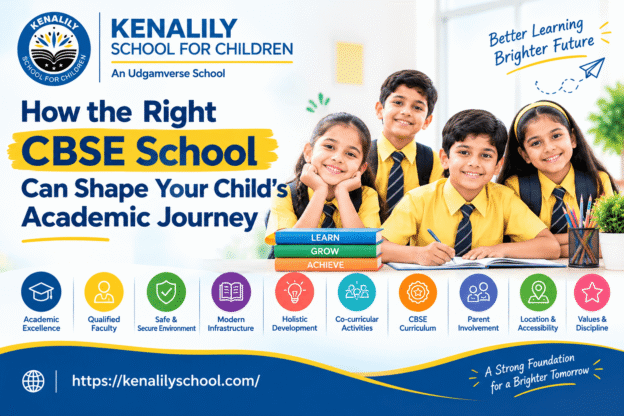
Cosing the right school is one of the most important decisions parents make for their children. A good school provides more than classroom education; it builds confidence, encourages curiosity, develops communication skills, and prepares students to face future challenges. The Central Board of Secondary Education (CBSE) offers a structured curriculum designed to develop conceptual understanding and support academic progression. However, every school has its own teaching methods, learning environment, and approach to student development. When exploring the Top CBSE Schools In Ahmedabad, parents should consider academic quality, teacher support, extracurricular activities, infrastructure, and emotional well-being. Understanding these factors can help families identify a school that matches their child’s learning needs, interests, and long-term educational goals.
How Does the Right CBSE School Shape a Child’s Future?
The right CBSE school shapes a child’s academic journey by providing structured learning, qualified teachers, individual guidance, and opportunities for personal growth. It develops conceptual understanding, critical thinking, discipline, and confidence while preparing students for higher education. Parents should evaluate teaching quality, student support, safety, and extracurricular opportunities before making a decision.
Why Is Choosing the Right CBSE School Important?
A child’s school environment influences how they learn, communicate, solve problems, and interact with others. The right educational setting helps students develop a positive attitude towards learning rather than focusing only on examination results.
CBSE schools follow a curriculum framework that emphasizes subject knowledge, competency-based learning, and age-appropriate educational development. The effectiveness of this approach also depends on how teachers deliver lessons and support students with different learning abilities.
A supportive school can help children develop essential skills such as:
- Academic confidence: Students become more comfortable asking questions, exploring concepts, and participating in discussions.
- Critical thinking: Practical activities and application-based questions encourage children to analyse information instead of memorizing facts.
- Personal development: Group projects, sports, and cultural activities strengthen teamwork, communication, and responsibility.
Parents should remember that academic achievement is only one part of educational success. A child’s happiness, curiosity, and willingness to learn are equally important indicators of a suitable school environment.
What Should Parents Look for in a CBSE School?
Before choosing a school, parents should evaluate several factors that influence educational quality and everyday student experiences.
1. Curriculum and Teaching Methods
A strong academic programme helps students understand concepts clearly and apply their knowledge in different situations. Instead of relying exclusively on textbook memorization, effective teaching combines explanations, demonstrations, discussions, projects, and regular assessments.
Ask how teachers support students who need additional help and how they challenge learners who progress more quickly. Schools that provide constructive feedback can help children recognize their strengths and improve areas that require attention.
2. Qualified Teachers and Individual Attention
Teachers play a central role in shaping a child’s attitude towards education. Experienced educators who communicate clearly can make difficult subjects easier to understand and encourage students to participate actively.
Parents should explore teacher qualifications, staff stability, classroom practices, and student-teacher interaction. It is also useful to ask how the school identifies learning difficulties and communicates academic progress to families.
3. Infrastructure and Learning Resources
Well-maintained classrooms, science laboratories, libraries, computer facilities, and age-appropriate play areas support different learning experiences. However, infrastructure should be evaluated alongside its actual educational use.
During a campus visit, check classroom conditions, cleanliness, drinking water, sanitation, emergency arrangements, and access to learning resources. Ask whether facilities are regularly maintained and whether students can use them as part of their everyday lessons.
4. Extracurricular Activities and Emotional Well-Being
Education extends beyond textbooks. Sports, music, art, debates, theatre, and collaborative projects allow children to explore interests and develop confidence.
A balanced school environment also recognizes that students experience academic pressure differently. Teachers and school counsellors, where available, should provide appropriate guidance and encourage respectful relationships among students.
How Can Parents Compare Schools In Ahmedabad List Options Effectively?
Searching for a Schools In Ahmedabad List can help parents discover nearby institutions, compare available facilities, and identify suitable admission options. However, a directory should be the starting point rather than the final basis for selecting a school.
Create a shortlist based on your family’s priorities. Consider the child’s age, preferred curriculum, daily travel requirements, learning needs, and the school’s educational approach.
A useful comparison should include the following factors:
| Evaluation Factor | What to Check | Why It Matters |
| Academic programme | Curriculum delivery and assessment methods | Supports consistent learning |
| Teaching quality | Teacher qualifications and student interaction | Influences understanding and confidence |
| Safety | Supervision, emergency procedures, and transport arrangements | Helps protect students |
| Facilities | Libraries, laboratories, sports, and classrooms | Supports different learning activities |
| School culture | Discipline, inclusion, and communication | Shapes everyday student experiences |
| Fees | Tuition, transport, activities, and additional charges | Helps families plan realistically |
Parents should visit shortlisted schools whenever possible. Speaking with teachers and observing the learning environment can reveal details that websites and brochures may not explain.
How Does a CBSE Education Prepare Children for Higher Studies?
CBSE education can provide a foundation for future academic pathways by developing subject knowledge, problem-solving abilities, and examination skills.
Conceptual Understanding and Competitive Examinations
Science, mathematics, languages, and social sciences help students develop different forms of reasoning and communication. A focus on understanding concepts can support preparation for higher secondary education and entrance examinations.
For students interested in engineering or medical pathways, a sound foundation in relevant subjects can be valuable. However, admission outcomes also depend on individual preparation, study habits, available support, and the requirements of specific examinations.
Digital Learning and Practical Skills
Modern learning environments may include educational technology, research assignments, presentations, and collaborative projects. These activities help students learn how to find information, communicate ideas, and use digital resources responsibly.
Parents should ask how technology supports classroom objectives rather than assuming that more devices automatically produce better learning outcomes.
Lifelong Learning Habits
Students benefit from learning how to organize their time, set goals, manage mistakes, and approach unfamiliar problems. These habits can improve their ability to adapt as subjects become more demanding.
Schools that encourage curiosity and independent thinking can help children become more confident learners throughout their academic journey.
How Can You Find a CBSE School In Ahmedabad Near Me?
When searching online for a CBSE School In Ahmedabad Near Me, convenience is important, but distance should not be the only selection criterion. A nearby school may reduce travel time, while another institution may offer teaching methods or student support that better match your child’s needs.
Start by checking the school’s location, transport routes, operating schedule, and admission requirements. If possible, visit during normal school hours to understand classroom activity, student movement, and general campus conditions.
Parents should also review the school’s official website and verify its affiliation status through the CBSE website. Confirm the school’s affiliation details, approved levels, and other relevant information rather than relying solely on advertising or third-party listings.
Consider these practical steps:
- Shortlist schools that meet your essential academic, safety, and accessibility requirements.
- Schedule visits and prepare questions about teaching methods, assessment, student support, and communication.
- Compare the total annual cost, including tuition, transport, uniforms, books, and activity charges.
This process helps families make a decision based on evidence instead of reputation alone.
What Legal and Safety Checks Should Parents Complete?
A school’s reputation is not a substitute for checking its credentials and safety arrangements. Before admission, parents should confirm the following details.
CBSE affiliation: Check the institution’s affiliation information using official CBSE resources. Confirm that the school’s status and permitted classes match the education being offered.
Safety procedures: Ask about visitor management, student supervision, emergency evacuation, fire safety, transport monitoring, and procedures for reporting concerns. Request information about applicable safety policies and child-protection practices.
Fee transparency: Review the published fee structure, payment schedule, refund rules, and any additional charges. Request written clarification when fees or admission conditions are unclear.
Student support: Understand how the school addresses bullying, learning difficulties, attendance concerns, and communication with parents.
Relevant requirements can depend on the institution’s location, recognition status, and applicable regulations. Parents should consult official school documents and appropriate education authorities when they need clarification about specific compliance requirements.
Expert Tips: Common Mistakes to Avoid When Choosing a School
Parents can make more informed decisions by looking beyond rankings, advertisements, and word-of-mouth recommendations.
- Focusing only on examination results: Strong results are worth considering, but they do not fully explain classroom quality, individual attention, or student well-being.
- Ignoring the child’s needs: A school that suits one child may not be the best fit for another. Consider learning preferences, interests, confidence, and support requirements.
- Overlooking total costs: Admission fees are only one part of the expense. Calculate recurring charges and transport costs before committing.
- Choosing based on facilities alone: Impressive buildings and advanced equipment are useful only when they contribute to meaningful learning.
- Skipping the school visit: Direct observation and conversations with staff can help parents assess whether the school’s values match their expectations.
A simple checklist can make the final decision easier. Record each shortlisted school’s strengths, concerns, fees, commute, safety arrangements, and academic approach. Discuss the findings with your child in an age-appropriate way before making the final choice.
Key Takeaways
- Choose a school that supports academic achievement and overall development.
- Evaluate teaching quality, curriculum delivery, facilities, safety, and student well-being.
- Compare schools using consistent criteria rather than relying exclusively on rankings.
- Verify affiliation details and review fee policies before admission.
- Consider your child’s interests, learning needs, and daily travel requirements.
- Visit shortlisted campuses and ask specific questions about teaching and student support.
Conclusion
The right school can influence how children approach learning, build relationships, develop confidence, and prepare for higher education. Parents exploring the Top CBSE Schools In Ahmedabad should assess academic standards, teaching practices, infrastructure, safety, extracurricular activities, and affordability before making a decision.
Finding the Best CBSE School In India is not simply about choosing the institution with the highest reputation. It is about identifying a learning environment that supports a child’s abilities, interests, and long-term goals. By researching school credentials, visiting campuses, comparing essential factors, and understanding their child’s needs, parents can make a thoughtful and informed choice.
For additional guidance, families can explore the school’s official website, review its educational approach, and contact its admissions team to understand the curriculum, facilities, and admission process.
Faqs
How do I select the right CBSE school in Ahmedabad?
Begin by identifying your child's educational needs, preferred location, and family budget. Compare shortlisted schools based on teaching methods, faculty, infrastructure, safety, extracurricular activities, and parent communication. Verify affiliation details through official CBSE resources and visit the campuses to understand how the schools operate in practice.
Are school rankings enough to identify a good CBSE school?
No. Rankings can provide an initial reference, but their usefulness depends on the criteria and evidence behind them. Academic outcomes, teaching practices, student well-being, safety, and individual attention are also important. Parents should use rankings alongside school visits, official records, and conversations with teachers before making a final decision.
When should parents start looking for CBSE school admission?
Parents should begin researching several months before their preferred admission period, especially when considering entry-level classes or schools with limited seats. Admission timelines and age requirements vary by school and applicable rules. Check official announcements, prepare the required documents, and confirm eligibility directly with the institution.
What documents are generally required for CBSE school admission?
Commonly requested documents include the child's birth certificate, photographs, previous school records where applicable, transfer certificate for students changing schools, and parent or guardian identification. Requirements vary according to the class and institution. Always obtain the current document checklist from the school's official admissions office rather than relying on a general list.