
Choosing the right school is one of the most important decisions parents make for their children. A school influences not only academic performance but also confidence, communication skills, creativity, discipline, and overall personality development. With thousands of CBSE-affiliated schools across India, identifying the right institution requires more than comparing examination results or infrastructure.
Parents searching for the Best CBSE School In India should evaluate the curriculum, teaching methods, faculty experience, student safety, extracurricular activities, and individual learning support. They should also consider the school’s location, fee structure, facilities, and approach to preparing students for future academic challenges.
This guide explains the essential factors to consider when selecting a CBSE school, how to verify its credentials, and how to compare institutions effectively. Whether you are exploring admission options for a young child or planning a transition to a higher grade, these practical insights can help you make an informed decision.
How Do You Choose the Best CBSE School in India?
The best CBSE school is one that combines strong academic teaching with experienced educators, student safety, extracurricular opportunities, and a supportive learning environment. Parents should verify CBSE affiliation, compare facilities and fees, review teaching practices, and visit shortlisted schools before making an admission decision. The right choice should match the child’s needs and family priorities.
What Makes a CBSE School a Good Choice?
The Central Board of Secondary Education (CBSE) is a national education board operating under the Ministry of Education, Government of India. Its curriculum emphasizes structured learning, conceptual understanding, and preparation for secondary and senior secondary examinations.
CBSE schools are available across urban and rural areas, making the curriculum accessible to families who may relocate between cities or states.
However, following the same board does not mean every school offers the same educational experience. Teaching quality, classro
should look beyond the curriculum and examine how the school implements it in everyday learning.
1. Verify CBSE Affiliation and Recognition
Before considering academic performance or facilities, confirm that the school has valid CBSE affiliation for the relevant campus and classes.
Parents can use the official CBSE website to review affiliation information and school details. Check whether the institution’s name, address, affiliation number, and approved levels match the information provided by the school.
It is also helpful to review the school’s mandatory public disclosure page, where applicable, for information about infrastructure, staff qualifications, and other required details.
Expert tip: Do not assume that a school is affiliated simply because its website, advertisements, or admission materials use the CBSE name. Verify the details through official sources.
2. Evaluate Teaching Quality and Faculty Experience
Teachers have a direct influence on how children understand concepts, develop curiosity, and approach challenges.
When comparing schools, investigate the following:
- Teachers’ qualifications and relevant experience.
- Student-teacher interaction and classroom participation.
- Availability of remedial classes or additional academic support.
- Methods used to assess student progress.
- Communication between teachers and parents.
A strong school encourages students to ask questions rather than rely entirely on memorization. Teachers should explain difficult concepts through examples, discussions, experiments, and age-appropriate activities.
Parents can ask how the school supports students who learn at different speeds and how teachers communicate concerns about academic progress.
How Can You Identify the Best CBSE School in India for Your Child?
There is no single school that is ideal for every student. A suitable institution should meet the child’s academic, emotional, social, and developmental needs while remaining practical for the family.
Consider these important factors before making a final decision.
3. Examine Academic Performance and Learning Methods
Academic results can provide useful information, but they should not be the only measure of educational quality.
Instead of focusing exclusively on board examination percentages, ask about the school’s approach to conceptual learning, regular assessments, problem-solving, and subject-specific support.
A balanced academic environment helps students understand why an answer is correct instead of simply memorizing information.
For younger students, observe whether classrooms encourage storytelling, reading, hands-on activities, and exploration. For older students, investigate laboratory access, subject choices, career guidance, and preparation for higher education.
4. Check Infrastructure and Learning Facilities
Modern facilities can support learning when they are properly maintained and used effectively.
Important facilities may include:
- Well-equipped science and computer laboratories.
- A library with age-appropriate books and learning resources.
- Clean classrooms, drinking water, and hygienic washrooms.
- Sports grounds and indoor activity spaces.
- Accessible facilities for students with disabilities.
- Safe transportation and appropriate supervision.
Do not judge a school only by photographs or promotional materials. During a campus visit, observe cleanliness, maintenance, classroom conditions, and whether students can use the advertised facilities regularly.
5. Understand Student Safety and Well-Being
Student safety should be a non-negotiable part of the admission decision.
Parents should ask about visitor management, transport supervision, emergency procedures, complaint reporting, and the school’s response to bullying.
Schools must comply with applicable child protection requirements and relevant government regulations. Parents can also ask how the institution handles student grievances, first aid, and communication during emergencies.
Emotional well-being matters just as much. A supportive school environment helps students feel comfortable approaching teachers, participating in activities, and discussing difficulties without fear of humiliation.
When Should You Search for a CBSE Board School Near Me?
Searching for a CBSE Board School Near Me is a useful starting point when building a shortlist of institutions. A nearby school may reduce daily travel time, simplify transportation, and allow children more time for rest, homework, sports, and family activities.
However, proximity should not be the only deciding factor.
Evaluate the following before selecting a nearby institution:
- Travel time: Check the actual journey during school hours, not just the distance shown on a map.
- Transportation safety: Understand pickup arrangements, supervision, and emergency communication procedures.
- Academic suitability: Compare teaching quality, curriculum delivery, and student support.
- Daily routine: Consider whether the commute leaves sufficient time for sleep, recreation, and homework.
- Long-term convenience: Think about whether the school remains practical as the child moves into higher grades.
For example, a school located slightly farther away may be worth considering if it offers suitable subject options and a supportive environment. Conversely, an excellent academic reputation may not compensate for an exhausting daily commute.
The goal is to balance educational quality with a sustainable family routine.
How Can Parents Compare the List of CBSE Schools in Ahmedabad?
Ahmedabad offers families a range of school options across different neighbourhoods. When reviewing a List Of CBSE Schools In Ahmedabad, parents should compare institutions using consistent criteria rather than relying on rankings or online reviews alone.
Start by identifying schools that are accessible from home or work. Then examine their affiliation details, grade availability, academic approach, fee structure, and extracurricular programmes.
Factors to Compare Before Admission
| Evaluation factor | What parents should check |
| CBSE affiliation | Current affiliation status and approved classes |
| Teaching quality | Faculty qualifications and classroom methods |
| Academic support | Assessments, remedial help, and progress reporting |
| Infrastructure | Laboratories, library, sports, and hygiene |
| Student safety | Supervision, transport, and child protection procedures |
| Fee structure | Tuition, transport, activities, and additional charges |
| Location | Commute time and transportation options |
| Development opportunities | Arts, sports, clubs, and leadership activities |
This approach helps families compare schools more objectively and identify options that fit their priorities.
6. Review Fees and the Total Cost of Education
School fees can vary based on facilities, grade level, transportation, and extracurricular programmes. Before admission, request a written breakdown of the expected annual expenditure.
Include tuition, admission charges where applicable, books, uniforms, transport, technology requirements, examination-related charges, and optional activities.
Ask about payment schedules, refund conditions, annual fee changes, and any additional charges that may arise during the academic year.
A school with a higher fee is not automatically better, and a lower fee does not necessarily indicate lower educational quality. Compare the actual services provided against your family’s budget and expectations.
7. Look Beyond Academics
Education should prepare children to solve problems, collaborate with others, communicate effectively, and manage responsibilities.
A school that supports holistic development may offer sports, music, art, theatre, debates, science activities, community projects, and student leadership opportunities.
Parents should ask whether these programmes are accessible to all students or limited to a small group.
For example, a child interested in science may benefit from regular laboratory work and project-based learning, while a child who enjoys sports may need consistent access to suitable coaching and playing facilities.
The right balance depends on the child’s interests, strengths, and developmental stage.
What Common Mistakes Should Parents Avoid?
Even careful parents can overlook important details when admission decisions are driven by deadlines, reputation, or recommendations.
Avoid these common mistakes:
- Choosing only by rankings: Online lists may use different criteria and may not reflect your child’s needs.
- Ignoring the school visit: Promotional photographs cannot fully demonstrate classroom conditions or teaching practices.
- Overlooking the complete fee structure: Additional expenses can significantly affect the annual budget.
- Neglecting the child’s preferences: Age-appropriate involvement can help children feel more comfortable with the transition.
- Assuming every CBSE school is equally effective: The board provides a curriculum framework, but school-level implementation varies.
- Waiting too long to apply: Admission schedules and seat availability differ between schools and grades.
Parents should collect information directly from schools, verify important claims, and allow enough time for thoughtful comparison.
Expert Insights: A Practical School Selection Checklist
Before finalizing admission, use this checklist to organize your research.
- Confirm the school’s current CBSE affiliation and relevant class approvals.
- Visit the campus and observe the learning environment.
- Speak with the admission team about faculty, assessments, and academic support.
- Review safety procedures, transport arrangements, and complaint mechanisms.
- Request a complete fee schedule and understand the payment terms.
- Check the school’s extracurricular opportunities and student support systems.
- Review the admission calendar, eligibility requirements, and required documents.
- Discuss the available options with your child, where appropriate.
Keep copies of the admission offer, fee receipts, school policies, and submitted documents. If you are transferring from another school, ask about transfer certificates, previous academic records, and any additional documents required for the new admission.
A structured process reduces uncertainty and helps families make decisions based on verified information rather than assumptions.
Key Takeaways
- Verify CBSE affiliation using official information before applying.
- Compare teaching quality, student safety, infrastructure, and academic support.
- Consider commute time and the overall family budget.
- Use local school lists to create a shortlist, not as a substitute for research.
- Evaluate extracurricular activities and emotional well-being alongside academic results.
- Visit shortlisted schools and clarify admission requirements before making a final decision.
Conclusion
Choosing the right school requires careful research, clear priorities, and an understanding of what helps children thrive. Academic performance matters, but it should be considered alongside teaching quality, student safety, facilities, extracurricular opportunities, accessibility, and affordability.
Parents searching for the Best CBSE School In India should verify affiliation, visit shortlisted campuses, ask detailed questions, and compare the complete educational experience rather than relying on reputation alone.
For families exploring options in Gujarat, finding the Best CBSE School In Ahmedabad, india starts with identifying schools that match their child’s learning needs and long-term development goals. Reviewing a reliable school website, checking official affiliation records, and speaking directly with the admission team can help parents make a confident, informed choice.
Faqs
Is CBSE better than other school boards?
CBSE can be a suitable choice for families seeking a nationally recognized curriculum and continuity when relocating within India. However, the best board depends on a student's learning preferences, future academic plans, and the quality of the individual school. Compare curriculum structure, assessment methods, available subjects, and teaching approaches before deciding.
How can I verify whether a school is CBSE-affiliated?
Visit the official CBSE website and use its affiliation-related resources to find the school. Match the institution's name, location, affiliation number, and approved classes with the school's own information. If any details differ or appear unclear, contact the school and seek clarification before paying admission fees.
What should parents check when searching for a CBSE school nearby?
Parents should compare commute time, transportation safety, teaching quality, student-teacher interaction, facilities, and the total annual cost. A nearby school can make daily routines easier, but educational suitability remains essential. Visit the campus, ask about student support, and verify affiliation rather than choosing solely on distance or online ratings.
When should parents apply for CBSE school admission?
Admission timelines vary by school, grade, and academic session. Parents should check the school's official admission announcements, eligibility conditions, document requirements, and application deadlines well in advance. For entry-level classes, it is helpful to research options before the expected admission period. For transfers, confirm seat availability and the documentation required for the student's grade.




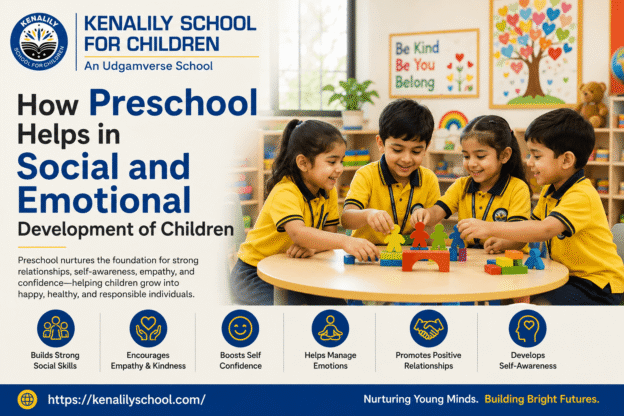
 Preschool is more than an early academic setting. It is often a child’s first structured opportunity to interact regularly with peers, follow routines, communicate with adults outside the family, and manage emotions in a group environment. These experiences can influence how children develop confidence, empathy, independence, cooperation, and emotional awareness.