
Choosing a school is no longer only about academic results. Parents increasingly look for an educational environment that develops knowledge, communication, creativity, confidence, problem-solving abilities, physical wellbeing, and responsible behaviour together. An integrated approach connects classroom learning with practical skills and co-curricular experiences, helping students apply what they learn in meaningful situations. For families researching the Best integrated school in Ahmedabad, understanding how this educational model works can make the decision more informed. This guide explains the key features of integrated education, its benefits, evaluation factors, and practical considerations parents should review before choosing a school.
What Is an Integrated School?
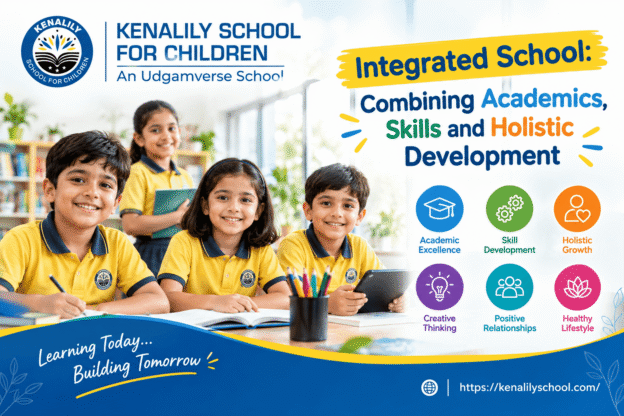
An integrated school combines academic education with practical skills, extracurricular activities, life skills, sports, creativity, technology, and social development. Instead of treating these areas separately, the approach connects them through age-appropriate learning experiences. The goal is to support a child’s intellectual, physical, emotional, social, and creative development alongside academic progress.
What Makes an Integrated School Different?
Traditional education can sometimes focus heavily on textbooks, examinations, and subject-specific learning. Integrated education takes a broader view by connecting academic concepts with activities and experiences outside conventional lessons.
For example, a science topic about plants could involve classroom theory, gardening activities, environmental discussions, observation exercises, and a project. Students therefore learn the concept while also developing observation, collaboration, communication, and problem-solving skills.
An effective integrated approach generally includes:
- Academic subjects aligned with the applicable curriculum.
- Sports and physical education.
- Performing and visual arts.
- Communication and presentation skills.
- Technology and digital literacy.
- Leadership and teamwork opportunities.
- Life skills and responsible decision-making.
- Project-based and experiential learning.
The important factor is not simply the number of activities offered. Parents should examine whether these experiences are meaningfully connected to student development.
Why Does Holistic Development Matter in School Education?
Holistic development recognises that academic knowledge is only one component of a child’s overall growth. Students also need opportunities to communicate, collaborate, manage responsibilities, make decisions, and respond creatively to challenges.
A balanced educational environment can help students develop:
- Academic understanding: Strong foundations in core subjects support future learning.
- Practical application: Projects and activities allow students to connect concepts with real situations.
- Social skills: Group activities encourage cooperation, listening, and respectful communication.
- Confidence: Presentations, competitions, performances, and leadership responsibilities provide opportunities to express ideas.
- Physical wellbeing: Sports and movement contribute to healthy development and discipline.
These areas should complement academic learning rather than compete with it.
How Does an Integrated School Program Support Learning?
An Integrated school program typically brings multiple learning dimensions into a coordinated educational framework. Instead of viewing academics, sports, arts, and skills as unrelated activities, the school can use them to reinforce broader learning objectives.
For instance, a mathematics project involving budgeting can introduce concepts such as percentages and calculations while also developing financial awareness and decision-making. Similarly, a group presentation can combine subject knowledge with research, communication, teamwork, and public speaking.
Parents evaluating such a model should consider:
- How frequently students participate in practical learning.
- Whether projects are linked to curriculum objectives.
- How teachers assess academic and skill development.
- Whether activities are appropriate for different age groups.
- How students receive feedback on their progress.
Which Features Should Parents Look for in the Best Integrated School in Ahmedabad?
There is no single feature that defines an effective school. Instead, parents can evaluate several interconnected areas.
1. Curriculum and Academic Foundation
The school should have a clear curriculum framework and qualified educators. Academic expectations should be appropriate for the child’s age and aligned with the relevant education board.
Parents can ask how the school balances examination preparation with conceptual understanding.
2. Experiential Learning
Children often understand concepts more effectively when they can observe, investigate, create, and apply knowledge. Laboratories, projects, educational visits, workshops, and activity-based lessons can support this process.
3. Co-Curricular Opportunities
Arts, music, drama, sports, clubs, debates, and other activities can expose students to different interests. A diverse programme also gives children opportunities to discover strengths that may not appear through conventional examinations.
4. Student Wellbeing and Safety
A school’s approach to physical safety, child protection, emotional wellbeing, hygiene, and emergency procedures deserves careful attention. Parents should review the school’s published policies and ask questions where information is unclear.
5. Teacher-Student Interaction
Teachers have a major influence on the learning environment. Parents can consider class sizes, teacher qualifications, communication practices, and how individual learning needs are addressed.
How Can You Evaluate an Integrated School Near Me?
Searching for an Integrated school near me can provide a starting point, but proximity should not be the only selection criterion. A nearby school may be convenient, while a slightly farther school may offer programmes or facilities that better match a child’s needs.
Use a structured evaluation process:
- Review the official school information: Check curriculum, activities, facilities, policies, and admission information.
- Visit the campus: Observe classrooms, activity areas, sports facilities, laboratories, and general organisation.
- Ask about teaching methods: Understand how practical learning complements academic instruction.
- Discuss student support: Ask how teachers identify and support different learning requirements.
- Compare total costs: Consider tuition, transportation, activities, uniforms, materials, and other applicable expenses.
A practical example is a family comparing two schools. One may have extensive facilities but limited project-based learning, while another may have fewer facilities but stronger integration between classroom subjects and practical activities. Looking beyond marketing descriptions helps parents make a more evidence-based comparison.
What Should Parents Compare Before Choosing a School?
| Factor | Basic Approach | More Integrated Approach |
| Academic learning | Mainly classroom instruction | Classroom learning plus application |
| Skills | Limited dedicated activities | Communication, teamwork and problem-solving integrated |
| Activities | Separate extracurricular periods | Activities connected with wider development |
| Assessment | Strong focus on examinations | Academic and developmental feedback |
| Learning style | Primarily textbook-based | Greater use of projects and experiences |
| Student development | Academic emphasis | Academic, social, physical and creative dimensions |
The table is a framework for comparison rather than a ranking system. Schools can use different approaches depending on their curriculum, resources, student population, and educational philosophy.
What Role Do Teachers Play in Integrated Education?
Teachers are central to making an integrated model effective. Simply adding activities does not automatically create meaningful integrated learning.
Educators can connect different subjects through projects, discussions, experiments, presentations, and problem-solving exercises. They can also observe how students communicate, collaborate, take responsibility, and apply knowledge.
Parents should therefore look beyond facilities and ask how teachers actually use those resources during the learning process.
What Legal and Educational Standards Should Parents Check?
Parents should verify that a school meets the requirements applicable to its education board and jurisdiction. For schools affiliated with the Central Board of Secondary Education (CBSE), parents can review information published by CBSE regarding affiliation, academic requirements, and applicable school regulations.
Other practical checks may include:
- Recognition or affiliation status.
- Safety and infrastructure requirements.
- Qualified teaching staff.
- Published school policies.
- Student records and documentation.
- Fee-related information and applicable regulations.
Requirements can change, so families should rely on current information from the relevant education authority and the school’s official documentation rather than outdated third-party claims.
What Common Mistakes Should Parents Avoid?
Parents sometimes select schools based on a single factor such as examination results, impressive infrastructure, advertisements, or proximity.
A more balanced evaluation considers the complete educational experience.
Common mistakes include:
- Choosing solely on the basis of rankings or promotional claims.
- Ignoring transportation time and daily routine.
- Not asking how extracurricular activities are delivered.
- Focusing on facilities without evaluating teaching quality.
- Failing to understand the complete fee structure.
- Not visiting the campus before making a decision.
- Assuming every integrated model provides the same learning experience.
The right choice should reflect the child’s learning needs, interests, age, personality, family priorities, and practical circumstances.
Due Diligence Checklist for Parents
Before finalising a school, parents can keep the following checklist:
- Verify the school’s affiliation or recognition.
- Review curriculum and academic expectations.
- Visit classrooms and learning spaces.
- Ask about student-teacher interaction.
- Understand assessment methods.
- Review sports and extracurricular opportunities.
- Ask about student safety and wellbeing procedures.
- Check transportation arrangements.
- Understand all applicable fees.
- Review admission requirements and documentation.
- Speak with the school administration about the child’s specific needs.
This process helps transform a general online search into a structured school-selection decision.
Key Takeaways
- Integrated education combines academics with practical, creative, physical, social, and life-skill development.
- Effective integration is about meaningful connections between learning areas, not simply adding more activities.
- Parents should evaluate curriculum, teaching quality, student wellbeing, facilities, activities, costs, and school policies together.
- Campus visits and direct questions can reveal important details that may not appear on a website.
- The most suitable school depends on the individual needs of the student and the priorities of the family.
Conclusion
An integrated approach to education aims to develop students beyond textbook knowledge by connecting academics with practical experiences, communication, creativity, physical activity, collaboration, and life skills. For families evaluating an Integrated school in Ahmedabad, the selection process should focus on the complete educational environment rather than one isolated feature.
Parents researching the Best integrated school in Ahmedabad can begin by reviewing official information, visiting shortlisted campuses, understanding teaching practices, and comparing academic and developmental opportunities. Learning more through the relevant school’s official website can also help families review its curriculum, facilities, policies, and admission information before making an informed decision.
Faqs
Is an integrated school suitable for every child?
An integrated educational approach can support many students, but suitability depends on individual learning preferences, interests, developmental stage, and family expectations. Parents should examine the school's teaching methods, academic structure, activities, student support, and daily routine before deciding whether its approach matches their child's requirements.
How do I find an Integrated school near me?
Start by identifying schools within a practical travel distance and then compare their curriculum, affiliation, teaching approach, facilities, activities, student support, fees, and policies. Visiting shortlisted schools can provide useful insight into classroom environments and how the school's stated educational philosophy is implemented in practice.
Does integrated education focus less on academics?
Not necessarily. A well-designed integrated model can maintain academic standards while using projects, activities, experiments, and practical experiences to strengthen understanding. The objective is generally to complement academic learning rather than replace it. Parents should review curriculum details and assessment methods to understand how a particular school balances both areas.
What should parents check before selecting an integrated school?
Parents should check affiliation or recognition, curriculum, teaching quality, student safety, facilities, extracurricular programmes, assessment methods, transportation, fees, admission requirements, and communication practices. It is also useful to visit the campus and ask how practical activities contribute to learning rather than evaluating the school solely through promotional information.